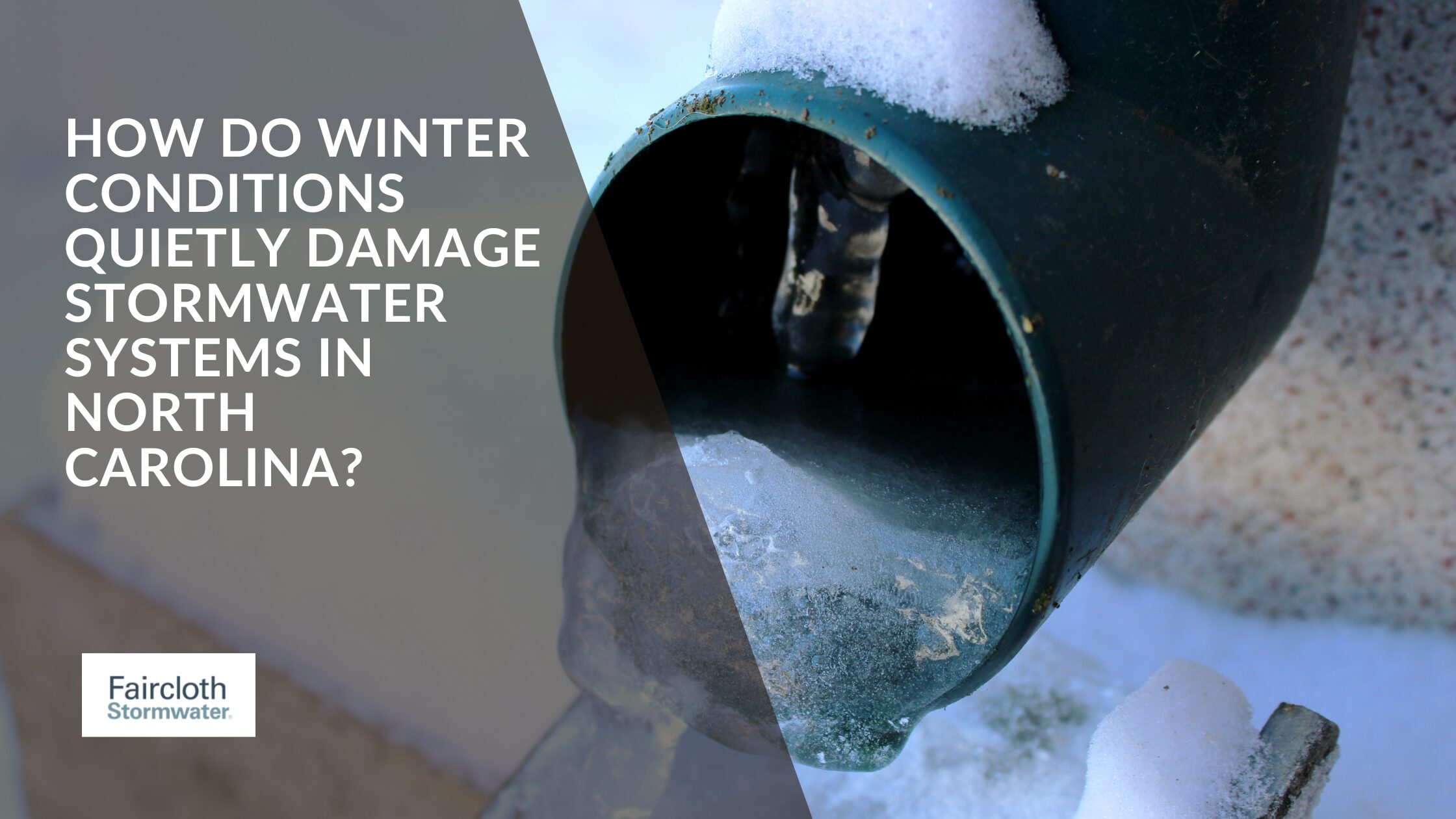
North Carolina’s winters are mild enough that most property owners never think twice about stormwater system maintenance until spring. That’s a problem. The Federal Highway Administration documents that freeze-thaw cycles cause infrastructure deterioration as water forces its way into cracks, expands during freezing, and widens those cracks with every cycle. The damage doesn’t wait for a severe winter to get started.
What makes North Carolina’s climate particularly hard on stormwater infrastructure isn’t the cold itself. It’s the back-and-forth. Temperatures can cross the freezing threshold dozens of times between October and March, stressing the same structural points repeatedly before anyone thinks to look.
Why Freeze-Thaw Cycles Are a Bigger Risk Than Constant Cold
A region locked in sustained cold actually fares better than one with frequent swings around the freezing point. When temperatures fluctuate across 32 degrees repeatedly, water trapped inside soils, concrete joints, and pipe materials expands and contracts with each pass.
Pressure builds during every freeze. Gaps open during every thaw. By the end of a North Carolina winter, that cycle may have run dozens of times, enough to crack headwalls, split pipe joints, and shift embankment soils without leaving a visible trace until spring.
How Winter Conditions Stress Stormwater Control Measures
Stormwater Control Measures (SCMs) are engineered systems that manage runoff, protect water quality, and maintain regulatory compliance. Freeze-thaw activity attacks all three functions through different pathways.
Structural integrity suffers in pipes, concrete outlets, and retaining walls. Hydraulic performance drops when frost heaving dislodges sediment or outlet structures crack and shift out of alignment. A significant portion of this damage develops below grade or in areas not visible from the surface, which is why post-winter conditions often look worse on paper than they do in person.
SCM Components Most Vulnerable to Freeze-Thaw Damage
The table below shows which SCM components are most at risk, what typically fails, and how visible that failure tends to be.
| Component | Common Failure Mode | Typically Visible? |
| Inlets, outlets, and headwalls | Concrete cracking; outlet separation from pipe connections | Often visible |
| Pipes and conveyance systems | Joint failure and misalignment from shifting soils | Usually hidden |
| Detention and retention basin embankments | Internal settlement and slope instability | Partially visible |
| Underground detention systems | Soil pressure on vaults; riser separation at grade | Hidden until access |
| Vegetated SCMs (bioretention, bioswales) | Soil heaving, root disruption, edge erosion, vegetation dieback | Visible in spring |
| Riser structures and control devices | Joint cracking near orifice plates; reduced flow control precision | Partially visible |
Older corrugated metal pipes are particularly prone to joint separation after multiple freeze-thaw seasons. When vegetated SCMs lose significant plant cover over winter, bare soil stays exposed to spring runoff, which compounds erosion and sediment control problems that extend into the growing season.
Regional Freeze-Thaw Variations Across North Carolina
Risk levels vary considerably depending on where in the state the property sits.
Mountain Region (High Risk): Western counties log more freeze-thaw cycles per season, with longer overnight freezes followed by sharp daytime warming. Slope instability on SCM embankments is a common result.
Piedmont and Coastal Plain (Moderate but Deceptive Risk): The Triangle, Triad, and Charlotte metro areas see frequent rain-on-freeze events that saturate soils before temperatures drop, causing internal settlement that’s easy to miss. In both regions, a moderate winter is not a safe one for stormwater infrastructure.
Early Warning Signs of Winter-Related Stormwater Damage
Post-winter inspections should look for the following. Reviewing the annual stormwater inspection checklist before heading out helps confirm nothing is overlooked.
- New or widening cracks in concrete inlet and outlet structures
- Sediment displacement or scour around outlet pipes after winter storms
- Standing water in areas where infiltration previously occurred
- Uneven or sunken surfaces on basin floors or around riser structures
- Vegetation dieback in bioretention areas and vegetated swales
- Erosion at the edges of SCM embankments or turf transitions
Most of these signs show up in late winter or early spring. They look recent. In most cases, the underlying damage started months before.
Why Winter Damage Often Leads to Compliance Issues
Freeze-thaw failures rarely show up as immediate violations. A cracked headwall quietly lets erosion gain ground. A shifted pipe joint loses treatment efficiency over weeks, not days. Vegetation dieback adds sediment loads the SCM was never sized to handle. The individual problems are small. The cumulative effect on compliance is not.
By the time an annual inspection documents these issues, corrective action requirements can be substantial. A significant share of spring Notices of Violation trace back to winter damage that property owners didn’t know was there. Catching it early, before inspectors do, is far less expensive.
When to Bring in Professional Stormwater Support
SCMs with recurring maintenance issues, visible post-winter damage, or upcoming regulatory reviews warrant a professional look before those problems compound. Faircloth Stormwater works with property owners and facility managers across North Carolina, from the Mountain region to the Coastal Plain, and understands how each region’s climate patterns translate to specific SCM failure modes.
Our team provides stormwater compliance assistance for post-winter repairs, erosion, and structural issues, as well as stormwater inspections and consulting for facilities approaching annual certification. If winter conditions have left your system in an uncertain state, getting a professional evaluation scheduled before spring storms arrive is a reasonable next step.
Request a Quote to schedule an inspection today.
Schedule a Post-Winter Stormwater Inspection in North Carolina
North Carolina’s freeze-thaw season is harder on stormwater infrastructure than most property owners expect. Schedule a post-winter stormwater inspection with Faircloth Stormwater and identify freeze-thaw damage before it becomes a compliance issue.
Frequently Asked Questions
Does North Carolina get cold enough to cause serious stormwater damage?
Yes. Sustained extreme cold is not the issue. What damages stormwater infrastructure in North Carolina is the frequency of freeze-thaw cycling throughout the season. Water inside pipes, soils, and concrete structures expands and contracts each time temperatures cross the freezing point. After dozens of cycles in a single winter, that stress adds up.
Which stormwater systems are most at risk in NC winters?
Concrete inlets, outlets, headwalls, and pipe joints take significant stress from freeze-thaw activity. Vegetated SCMs such as bioretention areas are vulnerable to soil heaving and plant dieback. Underground detention systems and basin embankments can shift and settle as frost moves through surrounding soils.
When should I inspect my stormwater system after winter?
Late winter or early spring is the right window, once most freeze-thaw activity has wrapped up. Getting an assessment done before the growing season sets in, before vegetation obscures damage in SCM areas, gives your team the clearest picture of what winter left behind.
What happens if winter damage goes unaddressed?
Treatment efficiency drops, erosion and sediment loading increase, and annual inspections are more likely to result in compliance violations. Minor structural failures don’t stay minor. Left alone, they tend to escalate into repairs that cost considerably more than a proactive inspection would have.