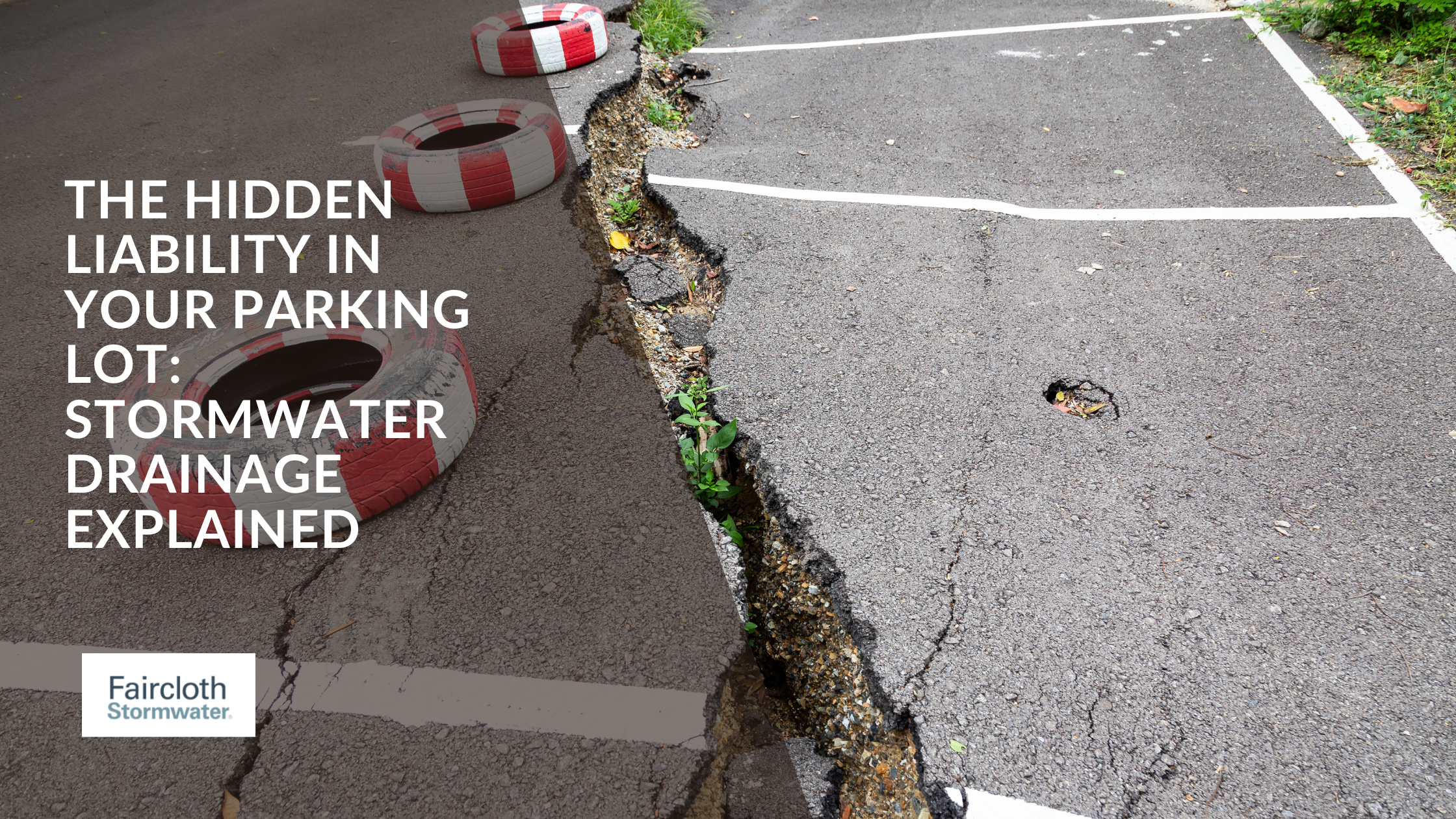
Your business parking lot does more than provide customer convenience. It creates a regulatory liability that can trigger thousands of dollars in fines, repairs and environmental cleanup costs when stormwater management fails.
Each square foot of asphalt blocks natural water absorption, sending rainfall racing across surfaces where it picks up pollutants before reaching storm drains. This runoff activates federal and state regulations holding property owners accountable for water quality protection and flood prevention. Property managers who grasp these requirements dodge expensive violations and protect investments from emergency repair costs.
Understanding Parking Lot Stormwater Challenges
Parking lots disrupt natural water cycles by replacing permeable ground with impervious surfaces. Rain that would normally soak into soil now rushes across pavement, collecting oil, grease, sediment, metals and vehicle-related contaminants along the way.
Contaminated runoff flows through storm systems straight into local waterways, delivering pollutants that damage aquatic ecosystems and threaten drinking water supplies. EPA data shows stormwater runoff causes 40% of water quality problems in the nation’s assessed rivers and lakes. Typical pollutants include petroleum products from leaking vehicles, heavy metals from brake dust and tire particles, plus sediment from cracking pavement.
Parking lots generate flooding risks for neighboring properties while overloading municipal storm systems during heavy rain. These events cause property damage, create safety hazards and trigger costly emergency responses. Large parking facilities can produce 10 to 20 times more runoff than natural landscapes, causing erosion and infrastructure problems far from the original site.
Hot pavement adds another layer of complexity by heating stormwater before discharge. This thermal pollution stresses fish and other aquatic life while disrupting ecosystem balance in receiving waters.
Business owners can mitigate these risks through Stormwater Compliance Assistance that ensures systems meet EPA and state standards.
Federal and State Regulations You Must Follow
The Clean Water Act mandates stormwater discharge management through the National Pollutant Discharge Elimination System program. Commercial properties often need Municipal Separate Storm Sewer System permits specifying stormwater control requirements. Phase II rules extend coverage to smaller municipalities and construction projects disturbing one acre or larger.
Property owners must install systems managing both runoff volume and quality. Compliance demands annual inspections by qualified professionals, detailed maintenance records, performance monitoring and regulatory reporting. Many properties turn to Stormwater Inspections & Consulting for expert evaluations that keep documentation and permits in good standing.
Industrial sites face stricter requirements under specialized permits addressing facility-specific pollution sources and operational hazards.
State and local authorities frequently impose stricter standards than federal minimums. Communities establish stormwater utilities or assessment districts funding compliance programs and infrastructure upgrades. Local codes may demand specific design criteria, maintenance procedures and professional certifications exceeding federal requirements.
Inadequate stormwater system maintenance triggers violations, hefty fines and intensified regulatory scrutiny. Property owners risk liability for environmental damage from contaminated site runoff. Recent enforcement cases produced penalties from $10,000 to $100,000 for major violations, plus daily fines continuing until corrections are completed.
Common Stormwater Control Measures for Parking Lots
Detention and Retention Systems
Detention ponds store stormwater temporarily during rain events, releasing it slowly to prevent downstream flooding. These dry basins stay empty between storms, focusing on flow control. Retention ponds hold permanent water levels, delivering ongoing treatment through settling and biological activity. Wet systems typically remove more pollutants because longer detention allows particle settling while biological processes break down contaminants.
System sizing depends on parking area drainage and local rainfall patterns. Engineers usually design for 10-year or 25-year storm events based on local codes and downstream flood potential. Maintenance involves sediment removal, vegetation care and outlet structure inspections.
Bioretention Areas
Vegetated systems use engineered soils, plants and natural processes filtering parking lot pollutants. Rain gardens and bioretention areas integrate into parking lot landscaping, delivering functional treatment with visual appeal. These systems effectively remove suspended solids, nutrients and dissolved pollutants through physical, chemical and biological mechanisms.
Soil media combines specific sand, soil and organic ratios promoting infiltration while supporting vegetation. Native plants adapt to local conditions, needing minimal care after establishment. Well-designed bioretention removes 80% to 90% of suspended solids plus substantial portions of nutrients, metals and petroleum compounds. To design and maintain these systems correctly, property owners often rely on Stormwater Engineering Services that ensure compliance from the start.
Underground Storage Systems
Limited surface space makes underground detention attractive for stormwater management without sacrificing parking capacity. Options include modular chambers, concrete vaults or gravel trenches storing runoff beneath pavement. Advanced designs add treatment features like oil-water separators or media filters improving water quality.
Underground systems suit urban areas where land costs are high and parking spaces valuable. Regular inspection and maintenance prevent clogging and structural issues. Access points need strategic placement allowing equipment entry for cleaning and repairs.
Permeable Pavement Solutions
Permeable surfaces let water pass through into underlying storage, cutting surface runoff volumes. Technologies include porous asphalt, pervious concrete and interlocking pavers suitable for parking areas and walkways. Properly designed and maintained systems often reduce runoff by 50% or more versus conventional asphalt.
Regular vacuuming removes debris that clogs surface pores. Performance is best with lighter traffic loads and appropriate subgrade conditions. Heavy vehicle areas require careful load-bearing capacity analysis.
Maintenance Requirements and Costs
Stormwater systems need ongoing care for effective operation and regulatory compliance. Sediment removal ranks among the most frequent and expensive needs since accumulated sediment cuts system capacity and treatment performance. Most detention ponds need sediment removal every five to 10 years, costing $5 to $15 per cubic yard removed.
Bioretention vegetation management includes weeding, plant replacement and soil amendments. Healthy plants are vital for pollutant removal and system stability. Dead or diseased vegetation needs prompt replacement maintaining treatment effectiveness and preventing erosion.
Structural elements like pipes, outlets and concrete may need periodic repair or replacement from age and weather damage. Regular inspections catch minor issues before major failures develop. Preventive maintenance typically costs 10% to 20% of emergency repair bills.
Professional maintenance services help owners develop comprehensive plans addressing routine needs while preventing expensive emergencies. Faircloth’s certified team provides Erosion & Sediment Control solutions to extend system life and protect against recurring failures.
Annual inspection and maintenance expenses usually cost far less than system replacement or regulatory penalties. Strategic maintenance scheduling extends system life while improving long-term performance.
The Financial Impact of Non-Compliance
Ignoring stormwater requirements produces serious financial consequences. Regulatory violations carry fines reaching thousands daily until fixed. Emergency flood-event repairs cost substantially more than planned maintenance. Recent studies document emergency stormwater repairs costing three to five times scheduled maintenance expenses.
Environmental damage liability from contaminated runoff can affect property owners. Flooding and water quality insurance claims may increase premiums while limiting coverage options. Some insurers now demand stormwater management proof before covering flood damages.
System breakdowns create business interruption when parking becomes unusable from standing water or regulatory shutdowns. These indirect costs frequently exceed direct repair bills while damaging customer and tenant relationships.
Proactive stormwater management protects property investments and cuts long-term operating expenses. Professional services identify brewing problems before they become costly emergencies.
Professional Stormwater Management Services
Effective parking lot stormwater management demands specialized regulatory knowledge, engineering expertise and maintenance experience. Professional services deliver compliance expertise protecting property investments. Qualified specialists provide specialized equipment, regulatory understanding and proven solutions preventing expensive mistakes and violations.
Faircloth Stormwater’s experienced team brings more than 30 years of stormwater expertise plus in-house engineering capabilities. We help property owners understand regulatory duties, implement effective controls and maintain systems for peak performance. Our Professional Engineer certification delivers credibility and technical knowledge required for annual inspection reports and compliance documentation.
We provide annual inspections, maintenance planning, regulatory compliance support and emergency repairs. Our approach develops cost-effective solutions protecting properties while meeting all applicable regulations. Our capabilities span everything from Pond Conversion Solutions to Compliance Assistance ensuring your parking lot stormwater system stays compliant and effective.
Schedule Your Stormwater Consultation
Frequently Asked Questions
Do all parking lots require stormwater management systems?
Most commercial parking lots require some form of stormwater management, especially those larger than one acre or located in regulated areas. Requirements vary by location, size and local regulations. Many jurisdictions require stormwater controls for smaller developments as well.
How much does parking lot stormwater management cost?
Costs vary significantly based on system type, size and site conditions. Initial installation typically ranges from $3 to $15 per square foot of parking area. Annual maintenance costs are usually 2% to 5% of the initial installation cost, making proactive maintenance much more affordable than emergency repairs.
What happens if my parking lot stormwater system fails inspection?
Failed inspections can result in violations, fines and required corrective actions within specified timeframes. Common issues include sediment buildup, vegetation problems or structural damage that must be addressed to maintain regulatory compliance.Can I retrofit my existing parking lot for better stormwater management?
Yes, existing parking lots can often be modified to improve stormwater management. Options include adding bioretention areas to landscaped islands, installing underground storage systems or converting portions to permeable pavement. Professional assessment helps determine the most cost-effective retrofit solutions.